| Welcome, Guest |
You have to register before you can post on our site.
|
| Latest Threads |
Activation Emails Going T...
Forum: Problems
Last Post: Bryantoxica
02-23-2025, 06:12 AM
» Replies: 1
» Views: 3,432
|
Greetings, don't forget t...
Forum: Technical Queries / Questions - Classic Mini
Last Post: NerissaScere
04-07-2024, 02:11 AM
» Replies: 0
» Views: 1,729
|
Hey there, make sure to k...
Forum: Technical Queries / Questions - Classic Mini
Last Post: NerissaScere
04-07-2024, 02:09 AM
» Replies: 0
» Views: 1,694
|
Converting from sealed be...
Forum: Technical Queries / Questions - Classic Mini
Last Post: MaryTiday
02-11-2024, 04:52 PM
» Replies: 20
» Views: 21,763
|
Engine number identificat...
Forum: Technical Queries / Questions - Classic Mini
Last Post: MaryTiday
02-11-2024, 04:44 PM
» Replies: 2
» Views: 3,971
|
Newby
Forum: Introduce Yourself
Last Post: Willy
01-29-2024, 02:56 PM
» Replies: 1
» Views: 2,361
|
Newby from Pretoria
Forum: Introduce Yourself
Last Post: Willy
01-29-2024, 02:56 PM
» Replies: 1
» Views: 1,960
|
Hello from Pta!
Forum: Introduce Yourself
Last Post: Willy
01-29-2024, 02:54 PM
» Replies: 1
» Views: 1,789
|
GTS needles
Forum: General Chit Chat
Last Post: Fabio
11-13-2023, 03:20 AM
» Replies: 0
» Views: 1,650
|
Do not be afraid to tweak...
Forum: Events for Cape Town - C P T M O C
Last Post: haoxiuyun
06-19-2023, 10:26 AM
» Replies: 0
» Views: 1,630
|
|
|
 Freeway use final drives - All sold
 |
|
Posted by: Sean1380 - 02-29-2016, 03:47 PM - Forum: For Sale - Mini related
- Replies (22)
|
 |
Hi guys
I have a mate in the UK who is having a major clean up, and has some crown wheel and pinions that may be of interest to us in SA.
As you are aware, our local Minis tend to run out of revs on the freeway, the 3.44 final drive in our local 1275 means you are doing around 4,600 rpm at 120kph (not sure of exact number, but am sure Boyscout or Miniac will know). and our little short stroke 1100s generally have a 3.76 diff which means probably close to 5,000 rpm at 120.
So my mate is stripping 3.1s, 3.2s and 2.9 CWP out of gearboxes.
Now to put this into perspective, a 3.2 will drop your revs in top by about 320 rpm, and a 3.1 will drop it by over 400rpm.
The longer 2.9 is really only suited to Minis with good powerful torquey engines, and not those running hairy arsed cams such as a 286 or a 296, as it will make traffic a bit of a pain in the behind :-) as it will drop your 4th gear revs at 120 by over 700 rpm.
So with this all in mind, there will be limited stock, so i just want names and diff sizes at the moment.
Prices still to be confirmed though.
Thanks
|

|
|
| Hi from Primrose |
|
Posted by: Quinny1293 - 02-29-2016, 01:30 PM - Forum: Introduce Yourself
- Replies (3)
|
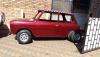 |
Hi everyone,
So finally I'm putting up a thread of my mini. It's not a beauty, but got me from a to d, not too far just incase something happens 
It's a 1982 Leyland Rebel Clubman, as far as i know the motor is fairly standard apart form the pistons that have been reboured to 20thou.

![[Image: DSC_0464_zpsb467a2e2.jpg]](http://i1338.photobucket.com/albums/o691/quintonbassani/DSC_0464_zpsb467a2e2.jpg)
This is what she looked like the day i got her home, yip i know bonnet was already open the first day I got her. Long story short, the guy told me she was in perfect condition and she wasn't. first problem and still a problem was clutch judder badly, with water hose leaking then 2nd time i went it was misfiring badly and wouldnt even start properly, 3rd time he phoned me and said could take the car at R5000 less (I know most of you will be reading this thinking how stupid could he be even after 2nd time to rather let the car go and search for another one) and i would have to fix it, unfortunately financially my parents couldnt afford anything else and my dad said yes.
After getting her it turned out the timing was out and the spark plugs were connected wrong. Drove it a while then found the carb was stuffed and got my hands on a downdraft manifold and sticked a weber 38dgas on from my dads v6, with a few mods and other jets it wasn't running too bad, then after saving and selling a few other stuff I managed to get a weber 36 DCD and that ran so well. Stupid enough I wanted a set of twins and sold the weber and got that, at that time my brother was driving my mini and was complaining like a little girl the fuel consumption was bad etc, so after pressure from him and my dad i sold it and bought a "recon" carb from someone and he stopped whinning for a bit. While also owning it I got a set of Bucket seats got them recovered in red leather and black cloth. Also got the interior redone and got some branches for the mini and made my own 2" exhaust from straight piupe i got. (thinking of it now, i know how stupid) There were a lot of other problems as well in between and head was off, gasket blew etc. Now at least i know it's normal for the mini.
After staring too long at her too many times, looking ayt the badly faded paint, thats when i thought time for a rebuild and some new make-up on her.
Will start a thread in the right place for that.


|
|
|
|
| Normal aspirated to turbo |
|
Posted by: DomMINIque - 02-29-2016, 08:07 AM - Forum: Technical Queries / Questions - Classic Mini
- No Replies
|
 |
Something I came across this morning on the uk forum. Not exactly for all our motors but the list would still apply.
Converting an Engine from NA to Forced Induction
For this section it will be looking at a Mini City E with a 998cc naturally aspirated engine and what needs to be changed or modified to allow a turbo to be used on this engine reliably. Being an older engine design a lot of parts have to be added for the turbo to work correctly, below is a list of what would be needed: - Fuel regulator
- High pressure fuel pump
- Increased diameter of fuel lines (fuel return line added, as not standard)
- Programmable ignition (Distributor as standard)
- Intercooler
- Boost gauge
- AFR gauge (Air to fuel ratio gauge)
- Dump valve
- Oil feed/drain
- Water feed/drain (if the turbo has one)
- Turbo (Garret T2 in this application)
- Sealed HIFF 44 Carburetor
- Manifolds (Exhaust and Inlet)
- Actuator
- Plenum chamber
- Colder spark plugs
- Oil pressure gauge
- Uprated oil pump
These above would be classed as modifications that would be the basics to converting from NA to Forced Induction. Without these base modifications there would be a lot of assumptions on how to car is performing.
The Fuel regulator is in the system to regulate the PSI of the fuel coming into the carb, this would work together with the carb plenum to create a raising PSI fuel rate, this is done by connecting the plenum and the fuel regulator together with a pipe, the fuel regulator then senses the rise in boost pressure and makes sure the PSI is always at the correct amount, idle PSI is set at around 1-3psi and the regulator raises this with boost, this is an important feature as lean off would mean big trouble for a turbo engine.
High pressure fuel pump is there to maintain the correct amount of fuel gets to the fuel regulator.
Increased diameter fuel lines are added for the same reason, if the pipe is too small it won’t allow enough fuel to get to the regulator, also the return line must be as unrestrictive as possible to allow the fuel to flow back to the tank, this must be plumbed before the pump on the low pressure side otherwise fuel would be sent up both pipes causing a lot of trouble.
Programmable ignition is a big feature to be added, with is car it originally ran with a distributor, now this is removed something needs to replace it, the ECU takes over this to allow for greater tunabity and safety by knowing exactly where the engine is at all times. To allow this system to work it must know where the engine is to start, this is done by fitting a crank position sensor which measures the rotation of the crank allowing the
ECU to know the exact RPM, next would be the MAP (Manifold Absolute Pressure) sensor in this application this allows the ECU to know the load being put on the engine. These are the inputs for the ECU this is all it needs to make the engine run, next are the outputs which in this case is only to the coil pack which gives the engine its firing order and its timing.
The intercooler has been mentioned already in this report and its advantages stated and that’s why it is used.
A Boost Gauge is important to know what boost pressures are being ran, this is more of a safety feature.
AFR Gauge, this is a very important piece of equipment, it is used to measure how rich or lean the mixture is in the exhaust, as a turbo engine can be damaged quickly with a lean out it is nice to see if the mixture is correct, you can also catch any problems before they get to bad. This is another safety feature.
Dump valves are used to try and minimise the pressure fluctuations and surges that happen through the system, as the turbo would like to keep spinning via inertia after the engine has decelerated, this would cause a pressure spike the dump valve is here to release that from the system.
Oil feed/drain, the feed is needed to cool the turbo but more importantly to keep the turbo lubricated without this the turbo wouldn’t last very long at all. The oil drain is just as important to get correct, if the oil drain is too restrictive it can cause the oil to pool in the turbo damaging seals and forcing oil into the fuel mixture causing it to go lean, WHICH IS BAD.
Water feed/drain if the turbo has these they must be plumbed in otherwise the turbos life will be reduced.
Sealed HIFF 44 Carburetor, this is the type of carb that will work with a mini engine, it’s a sealed unit which allows pressurized air to work with it.
Manifolds (Exhaust and Inlet), these would both need to be changed to allow for use of the turbo.
Actuator is fitted to maintain the chosen amount of boost, it works by sensing the boost pressure and opening the wastegate to keep it at the correct amount.
Plenum chamber, the function of the plenum is to equalize pressure for more even distribution, because of irregular supply or demand.
Colder spark plugs must be used as the charge is being cooled down more than the standard system.
An Oil pressure gauge is a must as any drop off in pressure needs to be rectified right away E.g turning the engine off.
An uprated oil pump is needed in the same way an uprated fuel pump is, it is there to make sure the supply of oil is enough to lubricate the engine and now the turbo too.
This now covers all the modifications needed to get the next stage, which is calculating the correct Compression Ratio. The compression ratio plays a massive part to a reliable engine, if it is too high the engine can be damaged through detonation, if too low economy and torque will be lost, so it is vital this is all calculated correctly and accurately to get the best performance and safety out of the engine. To calculate the compression ratio it is
V+C divided by C
V= the swept volume of the cylinder
C= the volume above the piston at TDC, E.g head, head gasket, piston dish, piston ring land and any space between the top of the piston & the top of the block if the piston doesn't come flush/level. You need to add all these volumes together to give C
Supporting Modifications- Large bore exhaust system
- X pin diff
- Uprated Radiator
- Uprated Brakes
- Uprated Engine mounts
Source: http://www.theminiforum.co.uk/forums/top...-somebody/
|
|
|
|
| Clubman reincarnated |
|
Posted by: GTSPhil - 02-27-2016, 07:03 AM - Forum: Your Classic Minis Story
- Replies (77)
|
 |
Hi Guys
I got called on to fix a 1098 Clubman. It had been resprayed and the interior had been redone, but the car just could not be driven and it kept on over heating and struggled to stop. 
The poor car had to be towed to my shop. While towing the left front wheel bearing was screaming like a pig. 
So after starting the car it smoked like a locomotive. I did a compression test and it was way down on all four cylinders. After removing the head. I found that the valves will need to be reground and the cylinder head will have to be serviced at the engineering shop.
I then found that the pistons are 6mm from the top of the block instead of nearly flush (like it would normally be) when the engine is at TDC, the part number on the piston indicated that the pistons fitted is in fact 1275cc pistons instead of 1100cc pistons.
I then proceeded to remove the engine and stripped the flywheel and gearbox off the block to find that the engine is indeed fitted with an 1100cc crank and not a 1275cc crank.


Just to list some other faults found on the journey to fixing this poor car.
Threaded rod was used instead of the correct nuts and washers and studs on the inlet/exhaust mountings and on the thermostat housing.
The head stud nuts was fitted with no washers and the rocker shaft studs also had no washers fitted, thus the head could not be torqued down to the correct spec.
At various places the studs was stripped and the nuts was forced on and or stripped.
The diaphragm of the clutch was not fitted with shake proof washers, the flywheel bolt and crank pulley bolt was fitted without their lock tabs.
The valve clearances was set incorrectly.
The bottom radiator hose is joined and no thermostat was fitted to the cooling system, also only water and no anti-freeze was in the cooling system. The water pump impeller is nearly rusted off the shaft.
The engine did not have enough oil in it. The engine was covered in oil even after I used my pressure washer to wash the engine it was still badly covered. All four gaiters for the CV joints was leaking the ghries out.
A bicycle cable was used as the throttle cable.
On the clutch the problems was numerous, the clutch arm, plunger and pushrod has been modified, bolts was used instead of the correct clevis pins to fit the clutch arm and pushrod. No locknut or clutch plunger stop was fitted to the plunger. The clutch plate is soaked in oil, due to the flywheel oil seal leaking and will have to be replaced. The flywheel and back plate will have to be balanced and machined correctly for the clutch to work properly, the throw out stop and return was not adjusted correctly.
The carburettor jet is un-usable and must be replaced, there is play in the throttle shaft and spindle, thus this must also be replaced.
The gearbox was mounted with bolts that are too short and some of them had stripped threads. The remote housing bushes was very badly worn and the rod eye is also worn past the point of being usable, that is why the gear selection was such a problem. The coupler for the gear change rod was fitted with bolts and nuts instead of the correct roll-pins.
The gaskets between the flywheel housing cover and engine seems to have been used more than once and the same goes for the gaskets between the gearbox and block. Too much gasket maker was used everywhere, on the oil feed pipe on the gearbox it was extremely bad due to the gasket maker almost blocking the oil feed hole.
The primary gear is busy disintegrating.
The steering rack boots are worn out and there is bad play in the steering rack itself. It seems like the steering shaft also has a problem where the shaft enters into the steering rack.
The Right hand ball joints are fitted without their locking tabs on the top and bottom.
The rubber cones are very badly worn on the front suspension and the ride height is severely affected. Also the lower control arm bushes and tie bar bushes must be replaced. The Right hand engine mounting did not have either of it’s two bolts and nuts fitted and was thus loose.
Both front wheel bearings are worn out very very badly. The steering was also a huge problem as the car when turned to the right after turning to the left would struggle to be corrected to the straight position again.
Due to the challenges involved in finding and using a 1275 crank, it was decided to utilize the current 1098 crank with a set of used pistons.
The engineering shop duly informed me that at 20 thou oversize the bores would not be usable, so I sourced a set of 30 thou pistons. Ironically the crank big end and mains was also at 30 thou. The cylinder head got serviced and needed two new exhaust valves.


Naturally the usual items was replaced also during the engine rebuild like oil- and water pump. Timing chain and follower, cam followers etc.
|
|
|
|
| Head re-torque |
|
Posted by: Junaid - 02-24-2016, 04:17 PM - Forum: Technical Queries / Questions - Classic Mini
- Replies (6)
|
|
Hi guys blew the head gasket, not really sure as to what was the cause
Question is, do I re-torque the head hot or cold
If hot, do I need to do so after the first heat cycle?
If cold, do I re-torque after the first heat up/cool down? or do I need to do 1000 kays again?
|
|
|
|
| Cars in The Park 2016 |
|
Posted by: Sooper - 02-23-2016, 01:57 PM - Forum: Events for Natal - M O C K Z N
- Replies (5)
|
 |
Hi Guys
Please see below, lets get registered early so we can get a bigger allocation this year.
we would also like to see some MOCSA and CPTMOC guys around.
The “Sunday Tribune – 41st Cars in the Park” will be held on Sunday the 15th May 2016 at the Ashburton Training
Centre, Pietermaritzburg. With the number of exhibitor’s vehicles, and to accommodate everyone in an orderly
manner we again ask everyone to register online, which worked very well last year. Bikers who want to display their
bikes must also register this year. Registration will open on the 21st February 2016.
The venue for this year’s event is again the Ashburton Training Centre, details are as follows:
Co-ordinates are: 29°38'43.23"S 30°28'8.62"E
Coming from either Durban or Pietermaritzburg turn of at the Ashburton N3 off ramp, and on the road over the
highway, Pope Ellis Drive, turn right and follow the road for +- 2km to the Ashburton Training Centre on the left.
|
|
|
|
|




![[Image: DSC_0772.jpg]](http://s1049.photobucket.com/user/Miniac86/media/My%20GTS/Interior/DSC_0772.jpg.html)
![[Image: DSC_0773.jpg]](http://s1049.photobucket.com/user/Miniac86/media/My%20GTS/Interior/DSC_0773.jpg.html)
![[Image: DSC_0774.jpg]](http://s1049.photobucket.com/user/Miniac86/media/My%20GTS/Interior/DSC_0774.jpg.html)


![[Image: DSC_0464_zpsb467a2e2.jpg]](http://s1338.photobucket.com/user/quintonbassani/media/DSC_0464_zpsb467a2e2.jpg.html)
